
Landscaping & yard
How to level a yard
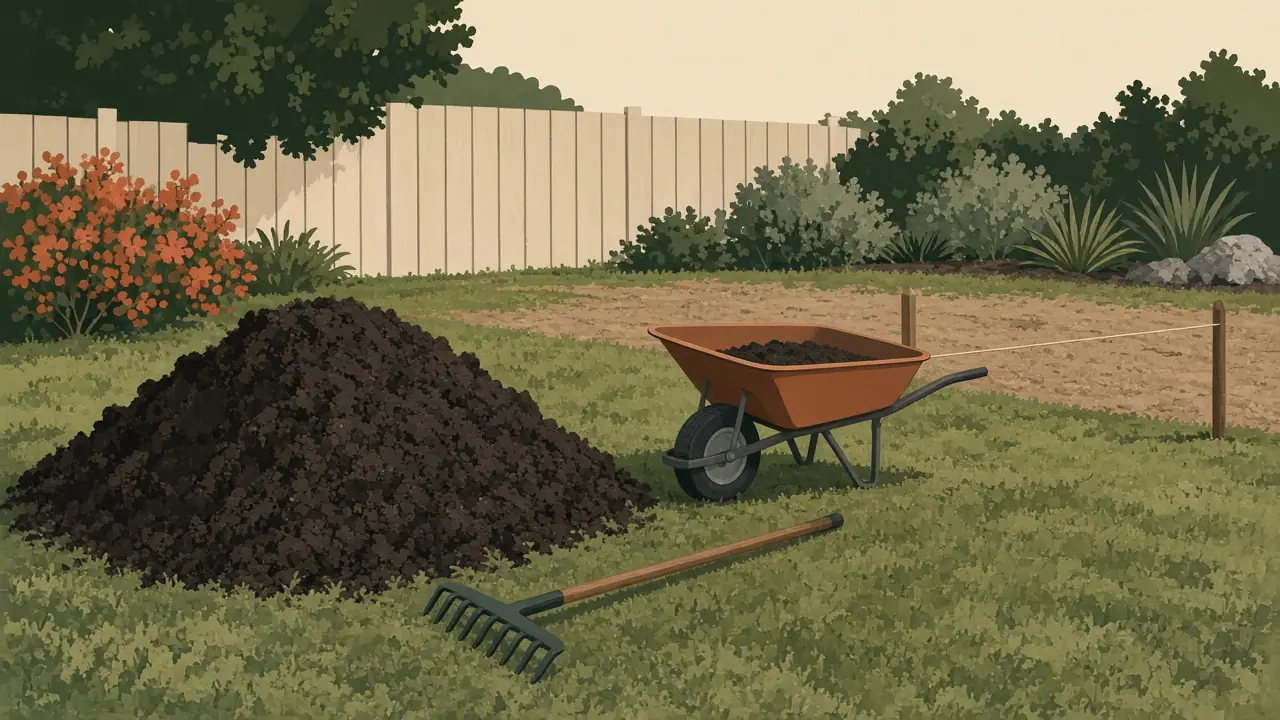
“Leveling” a yard usually means one of three jobs: filling shallow dips in a lawn, regrading a bare patch, or fixing soil that slopes toward the house. The first two are easy weekend work. The third matters most, because it decides where rainwater goes.
Before you dig or till: call 811. Don’t raise the soil against siding or wood framing, and don’t redirect your runoff onto a neighbor’s property; many towns regulate this. If water is getting into the basement, or the yard has big drainage problems, get a drainage contractor or civil engineer to look at it.
Find out what you actually have
- Drive a stake at each end of the area. Tie a string between them and level it with a line level.
- Measure from the string down to the ground every few feet. The differences show you the dips and humps and the overall fall.
- Near the house, check the slope away from the foundation (below).
Shallow dips in an established lawn (under about 1 in)
Topdress. Spread a thin layer of screened topsoil, or a topsoil and compost mix, rake it in so the grass blades still show, and water it. Clemson Extension’s limit is about ¼–½ in at a time. Repeat once the grass has grown through, usually a few weeks later in the growing season.
Deeper dips (about 1 in or more)
Lift the sod instead of burying it.
- Cut an H or X through the turf over the dip with a flat spade.
- Peel the flaps back carefully, keeping some soil on the roots.
- Fill underneath with topsoil, firm it with your foot and water to settle it. Overfill slightly, since it will sink.
- Lay the sod back, press it down and keep it watered until it roots.
Regrading a bare area
- Strip any remaining grass and weeds, and break up compacted soil.
- Rough-grade with a landscape rake: move soil from humps to dips, and check against the string line.
- Add topsoil to finish. The topsoil calculator gives cubic yards or bags from area × depth.
- Rake level, firm lightly, water to show up any low spots, then seed or sod.
Slope soil away from the house
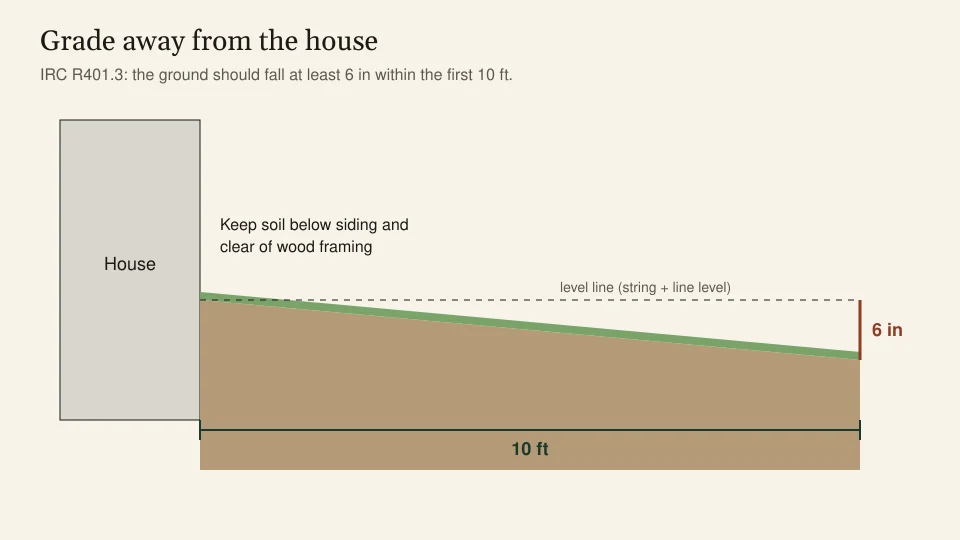
For new construction, the International Residential Code (R401.3) says the ground should fall at least 6 in within the first 10 ft from the foundation. Paved surfaces such as walks and patios within 10 ft should slope at least 2% away. Where there isn’t room for that fall, drains or swales carry water away instead. It’s a sensible target for an existing house too:
- Measure with the string-line method from the foundation outward.
- Build up soil next to the house with a heavier, less sandy fill or topsoil, compact it in layers, then finish with topsoil.
- Keep the finished soil below the siding and clear of any wood. Don’t pile it against window wells.
Sources
- Clemson Cooperative Extension, Topdressing a home lawn.
- University of Wisconsin–Madison Extension, Lawn aeration and topdressing (A3710).
- International Code Council, IRC R401.3 Drainage, via UpCodes, and ICC Code Basics: storm drainage.
- Common Ground Alliance, Call 811.
Questions worth answering
Can I just dump topsoil on the grass to level it?
Only in thin layers. Clemson Extension advises topdressing an established lawn no more than about ¼–½ in at a time so the grass can grow through. Thicker layers smother it.
Should I use sand or topsoil to level a lawn?
For a home lawn, screened topsoil or a topsoil and compost blend is the common choice because it matches what the grass already grows in. Advice on sand varies with soil and grass type, so ask your local extension office before using it.
When is the best time to level a lawn?
When the grass is actively growing, so it recovers quickly: spring to early fall for cool-season grasses, and late spring through summer for warm-season grasses.